
I paused to take in the view, which was exceptional. It felt as if I could almost see the curvature of the Earth. To the north stretched the barren, brown expanse of the Tibetan Plateau; to the south, the deep, lush valleys of Nepal.
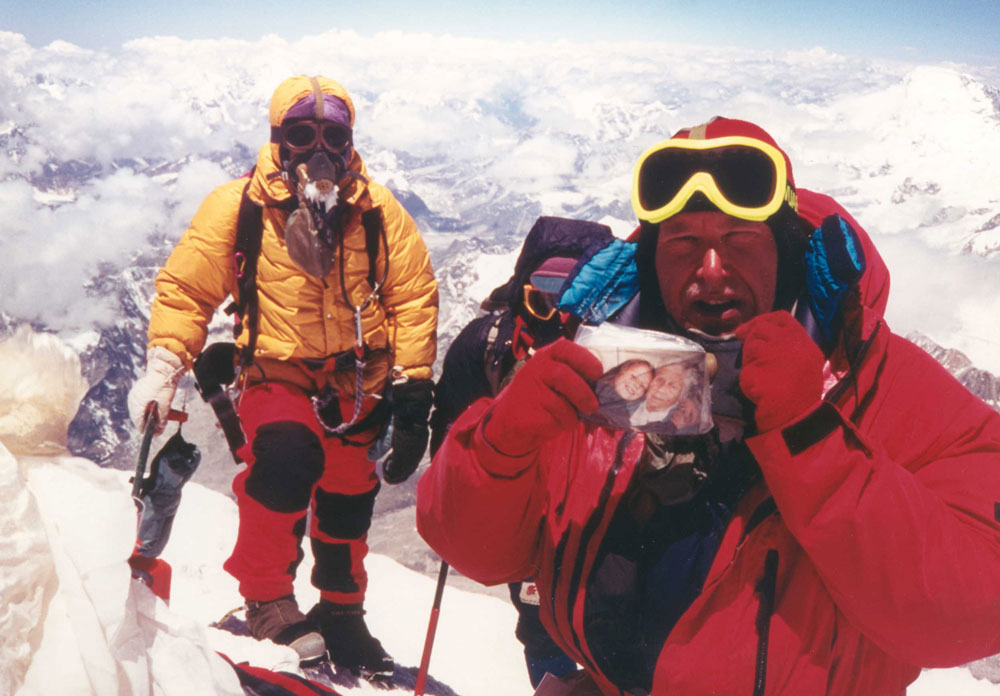
The final snow cone on Everest is surprisingly small, about the size of two king-size beds. It would be a pleasant place to sit and relax if it were a few thousand metres lower in the British hills. However, there was a cluster of aluminium poles and what looked like plastic lights, remnants of laser or GPS surveying equipment. All of it was festooned with Buddhist prayer flags and ceremonial silk scarves, fluttering in the wind like ragged washing.
But instinctively I knew this was no place to relax or become complacent. This is the death zone. Humans can only survive at this altitude for a limited time. Hours rather than days. Even if you are well acclimatised and lucky, you might last a couple of days before the body begins to shut down. The air is extremely thin; both atmospheric pressure and available oxygen are far lower than at sea level. 8000m+ is where jumbo jets fly and the temperature is 40 below or colder.
At these heights there is effectively no rescue. Helicopters have an operational ceiling of around 6,500 metres. There are no mountain rescue teams on standby, and even if there were it would take weeks to acclimatise a team to operate safely at these altitudes. In the death zone you are on your own. If you become immobile there is extraordinarily little anyone can do to help you. In some ways you would stand more chance of being rescued from the moon or from orbit on the International Space Station. At least the technology exists to send a spacecraft.
Many people imagine that standing on the summit of Everest would be an overwhelming and emotional experience. For me it was strangely matter of fact. I was working as a cameraman on a documentary about Brian Blessed attempting Everest. So instead of contemplating the moment too deeply, I simply got on with the job. Filming, checking equipment and myself, mentally and physically. I took my summit photograph, holding a picture of my daughter and Gran, rather than a flag.
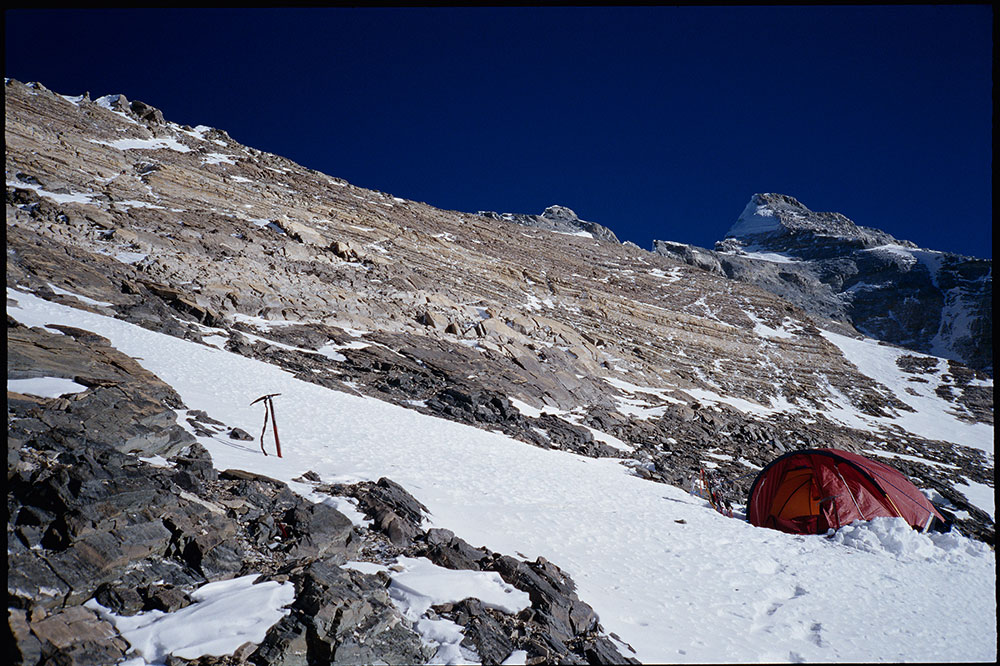
Only nine months earlier I had climbed K2, often called “the Savage Mountain,” and by comparison I felt comfortable on Everest. I enjoyed my moment on top of the world, savouring the fifteen or twenty minutes I could safely spend there. Unlike on K2, I did not feel the same tingle of fear or seriousness. There was plenty of daylight left and I felt strong and confident about the descent.
For a fleeting moment I felt as relaxed as if I were standing on Helvellyn, Mont Blanc, or even Roseberry Topping, but relaxed is different from complacent. I did not let my guard down, I kept alert to where I was.
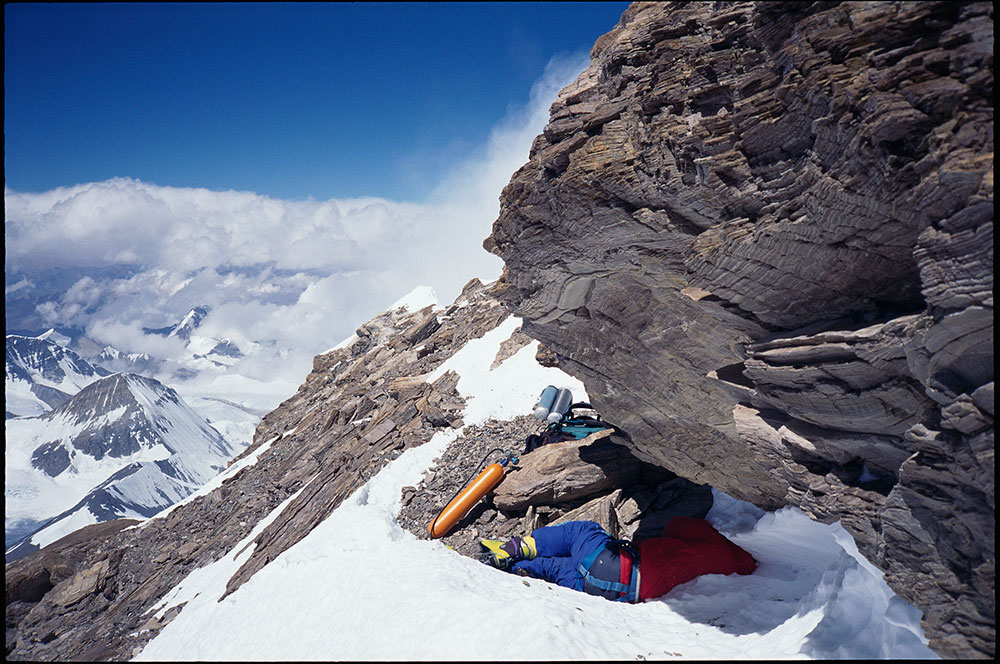
Just nine days earlier, eight climbers had died in a ferocious storm high on the mountain, that was to give rise to multiple books and a film, Into Thin Air. Three of their bodies were still frozen to the slopes on the north ridge above 8,000 metres, and I had passed close by them on my way up. Seeing them was a stark reminder of my mortality, and of how easily it could happen to any climber. Recovering those bodies was simply not possible. At that altitude it would take a formidable team of eight to ten people to recover a body safely, an enormously risky undertaking above 8,000 metres.
All too soon it was time to leave the top of the world and concentrate on the descent.
The upper section of the North Ridge route is dramatically exposed, with a 3,000m drop down the Kangshung Face on one side and a 2,500m fall toward the Kangshung Glacier on the other. In many ways it felt like a super charged version of classic British ridges such as Sharp Edge on Blencathra, Crib Goch on Snowdon, or the Carn Mòr Dearg Arête on Ben Nevis, only far bigger and far less forgiving.
There was no rescue team waiting below. So, I stayed focused, alert to every step, determined not to slip and make it safely back down to base camp.
I took my summit photograph on Everest, but I always save any real celebration until I am safely back in base camp. There is no point climbing a mountain only to die on the descent.
My personal motto has always been simple: No mountain is worth a life. Coming back is the real success. The summit is only a bonus.
People have long wondered whether George Mallory and Andrew Irvine reached the summit of Everest in 1924, decades before Tenzing Norgay and Edmund Hillary made the first confirmed ascent in 1953. It is possible they did.
When Mallory’s body was discovered in 1999, there was no photograph of his wife among his possessions. Mallory had planned to leave her photograph on the summit. Perhaps he did reach the top and left it there. We may never know, unless the lost camera from that expedition is ever found with a salvageable image.
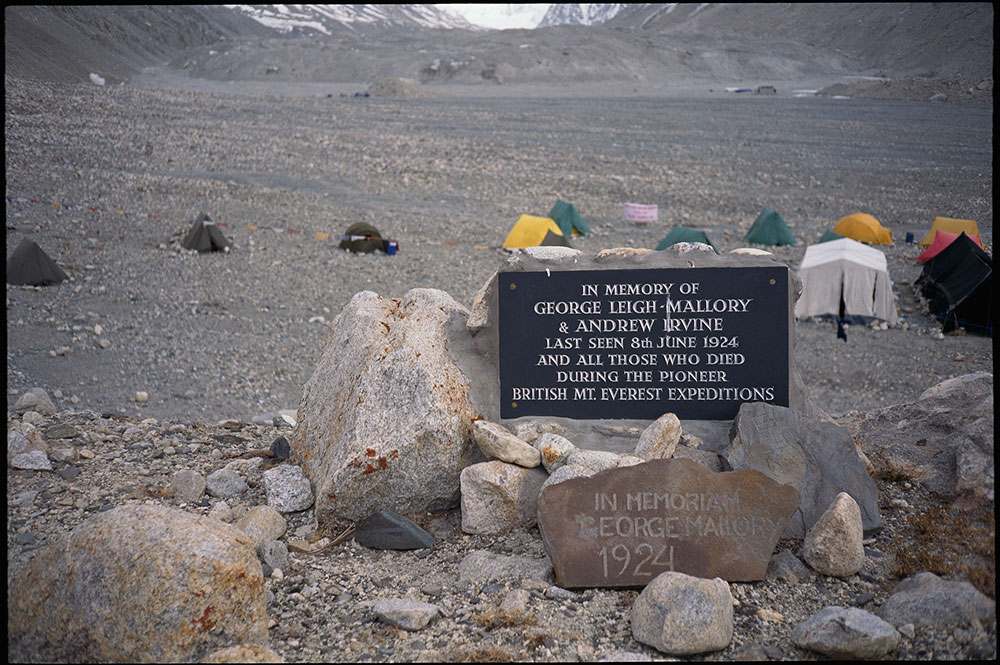
Sadly, he never made it back down, which is what really counts. In 1996 we carried a memorial plaque for Mallory and Irvine to Rongbuk Base Camp at 5,200 metres. As far as I know, it is still there today.
Everest is a honey pot &will always attract climbers & would-be climbers who want to stand on top of the world.Nowadays the climbing is less technical, with ropes fixed to the summit, but it is still a worthwhile climb & challenge. The dangers of avalanche, ferocious weather, frostbite, extreme altitude and no Mountain Rescue Teams remain. Even though you can buy a place on an organised, guided expedition, Everest should not be underestimated - its ascent is still a deadly challenge.